No Help, Full Refund
If you failed SAP C_TS452_2601 real exam with our C_TS452_2601 pass guide, first you can choose to wait the updating of C_TS452_2601 exam dumps or free change to other dumps if you have other test. If you want to full refund, please within 7 days after exam transcripts come out, and then scanning the transcripts, add it to the emails as attachments and sent to us. After confirmation, we will refund immediately.
One-year free update
If you bought C_TS452_2601 practice test study materials from our website, you will be allowed to free update your exam dumps one-year. If the latest version of SAP C_TS452_2601 exam dumps released, we will send it your email immediately, you just need to check your email.
Our website is a professional certification dumps leader that provides SAP C_TS452_2601 exam dumps material and C_TS452_2601 pass guide for achieving, not an easy way, but a smart way to achieve certification success in C_TS452_2601 real exam. We are equipped with professionals having vast experience in the C_TS452_2601 practice test; they are a committed team of individuals that make sure that the customers get the latest C_TS452_2601 test questions and C_TS452_2601 test answers. Our website is the single best training online tools to find your C_TS452_2601 practice test and to study for your SAP Certified - SAP S/4HANA Cloud Private Edition, Sourcing and Procurement real exam. Our aim is always to provide best quality practice exam products with best customer service.

24/7 customer assisting
We offer 24/7 customer assisting to support you in case you may encounter some problems, such as downloading or purchasing. If you have any problems please feel free to contact us.
Instant Download SAP C_TS452_2601 Exam Braindumps: Upon successful payment, Our systems will automatically send the product you have purchased to your mailbox by email. (If not received within 12 hours, please contact us. Note: don't forget to check your spam.)
About our products
Our website provides our customers with best C_TS452_2601 pass collection study materials. Our C_TS452_2601 exam dumps are written by IT experts who have vast experience and knowledge in the SAP Certified - SAP S/4HANA Cloud Private Edition, Sourcing and Procurement. The certified experts make sure that the SAP C_TS452_2601 exam cram is updated on a regular basis with C_TS452_2601 real exam so every customer can prepare C_TS452_2601 pass guide smoothly. The C_TS452_2601 practice test will enable you to improve your ability with minimum time spent on C_TS452_2601 real exam and maximum knowledge gained.
Difference between test engine and online test engine
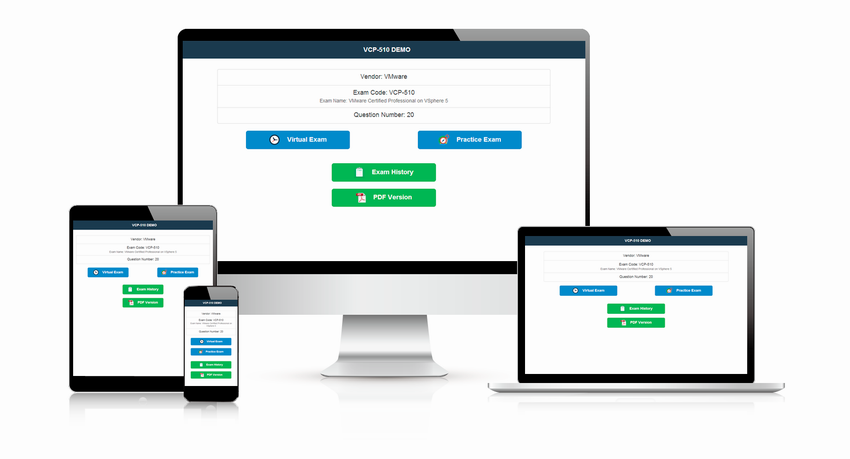
Test engine and online test engine both are a simulation of actual test; you can feel the atmosphere of C_TS452_2601 real exam by test engine and online version. You can only use test engine on the Windows operating system, but online version supports Windows/Mac/Android/iOS operating systems that mean you can practice SAP C_TS452_2601 test questions or test yourself on any electronic equipment. It doesn't limit the number of installed computers or other equipment.
SAP C_TS452_2601 Exam Syllabus Topics:
| Section | Objectives |
|---|---|
| Sourcing and Procurement Overview in SAP S/4HANA Cloud Private Edition | - Procurement Processes Overview - Organizational Structures and Enterprise Structures |
| Master Data | - Business Partner Concept - Purchasing Info Records and Source Lists - Material Master |
| Reporting and Analytics | - SAP Fiori Apps for Procurement - Standard Procurement Reporting |
| Invoice Verification and Financial Integration | - Logistics Invoice Verification (LIV) - Integration with Finance (FI) |
| Procurement Processes | - Special Procurement Processes - Release Procedures and Approvals - Purchase Requisition and Purchase Order Processing |
| Inventory and Warehouse Integration | - Stock Overview and Inventory Management Basics - Goods Receipt and Goods Issue |
| Sourcing and Supplier Management | - Supplier Evaluation - Request for Quotation (RFQ) and Quotation Processing |
SAP Certified - SAP S/4HANA Cloud Private Edition, Sourcing and Procurement Sample Questions:
A global apparel company is onboarding a new purchasing plant in SAP S/4HANA Cloud Private Edition after divesting it from a legacy ERP process. Material and supplier master records were loaded, and initial procurement tests can create requisitions and draft purchase orders. However, when buyers attempt to use quota-based supplier allocation for a set of replenishment materials, the system ignores the intended supplier split and consistently proposes only one source. The same allocation logic works correctly for comparable materials in an established plant.
The implementation manager wants the issue corrected before the divested plant begins live operation. The team must not introduce local exceptions or manual allocation because supplier balancing is part of the approved operating model and will be reused for future plants.
What is the best first action?
- A. Add a custom rule that forces alternating supplier selection for the affected plant until rollout stabilizes.
- B. Recreate the replenishment materials because source-allocation failures usually come from incomplete material descriptions.
- C. Verify whether the new plant has the required source-allocation-relevant organizational and master-data assignments for the affected materials.
- D. Ask buyers to alternate suppliers manually until the plant completes its first month of operations.
Correct Answer: C 🗳️
Explanation: Only visible for PassCollection members. You can sign-up / login (it's free).
A plastics manufacturer is validating down-payment and invoice-verification processing in SAP S/4HANA Cloud Private Edition after harmonizing purchasing controls across two company codes. Purchase orders and goods receipts are posting successfully, and standard invoice verification works for most suppliers. However, for one supplier segment in the newer company code, invoice processors can reference the purchase order and enter the invoice, but the document remains in a blocked follow-on state when down-payment-related settlement conditions are involved.
The same supplier segment works correctly in the established company code. The finance process owner wants the issue corrected before the shared-services team is onboarded. Manual journal corrections are not allowed, and the standard control design must remain intact and transportable for later rollout phases.
Which action should the consultant take first?
- A. Review whether the company-code-dependent settlement and invoice-control configuration is correctly aligned for the affected supplier segment and down-payment scenario.
- B. Grant broader invoice-processing access so the blocked documents can complete the follow-on step during posting.
- C. Ask the shared-services team to bypass down-payment-related invoices and process them manually until the rollout stabilizes.
- D. Recreate the affected purchase orders because blocked follow-on states usually begin with buyer-side document-entry differences.
Correct Answer: A 🗳️
Explanation: Only visible for PassCollection members. You can sign-up / login (it's free).
A distribution company is testing consumption-based planning in SAP S/4HANA Cloud Private Edition as part of a phased modernization from spreadsheet-driven replenishment. Forecast-relevant materials were loaded and planners completed initial parameter setup. For most materials, planning proposals are generated as expected. However, a group of high-usage spare parts shows no replenishment proposal even though recent consumption exists and the materials are active in the plant. The planners suspect the planning run itself is broken, but the issue appears only for the affected material subset.
The program manager wants the team to protect the modernization timeline while avoiding custom forecasting logic. The correction must remain within standard planning behavior and be reusable for additional materials entering the new model next quarter.
Which action is most appropriate?
- A. Increase the planning run frequency so the system recalculates the missing proposals more aggressively.
- B. Post additional test consumption against the materials because planning proposals usually appear only after a second transaction cycle.
- C. Check whether the affected materials have the required planning-relevant parameters and master-data settings needed for consumption-based proposal generation.
- D. Tell planners to create manual purchase requisitions for the spare parts until the new planning model is fully stabilized.
Correct Answer: C 🗳️
Explanation: Only visible for PassCollection members. You can sign-up / login (it's free).
<strong>CHALLENGE 2 — Planning-Linked Replenishment Stability for Recurring Consumption</strong> During analysis of one recurring-demand material, the team finds that changing only the purchasing view improves order creation speed, but replenishment still becomes unstable later. When they align the planning-linked material treatment together with procurement preparation, the behavior stabilizes across both sites. What is the best conclusion?
- A. The main problem was approval speed, not replenishment design
- B. The unstable replenishment behavior was caused by an upstream multi-layer dependency rather than a single downstream symptom
- C. The issue was solved by making the document faster to create, so no further planning review is needed
- D. The material should be removed from recurring procurement because it is too sensitive for shared handling
Correct Answer: B 🗳️
Explanation: Only visible for PassCollection members. You can sign-up / login (it's free).
<strong>CHALLENGE 1 — Source Allocation Stability for Shared Component Demand</strong> A plant coordinator argues that time-sensitive component demand should allow plant-level source choices whenever the intended allocation path does not appear quickly enough during validation. The governance office wants the revised template to remain reusable for later rollout waves. Which action is most appropriate?
- A. Preserve common allocation discipline and confirm whether representative shared-component demand enters purchasing with aligned source preparation
- B. Delay source-allocation validation until comparative supplier references in the connected on-premise context are no longer visible
- C. Remove shared-component demand from the remediation scope and validate only plant-specific purchasing scenarios
- D. Permit plant-level source choices for all urgent component cases because planting-season demand is more important during remediation
Correct Answer: A 🗳️
Explanation: Only visible for PassCollection members. You can sign-up / login (it's free).


 Page
Page 
 Earl
Earl  Pandora
 Ahern
Ahern  Isidore
  Sigrid
 Lucien
  Mandel
  Setlla
  Hannah
  Bridget
  Armand
  Kerr
Kerr  Gavin
Gavin  Sherry
  Giselle