Difference between test engine and online test engine
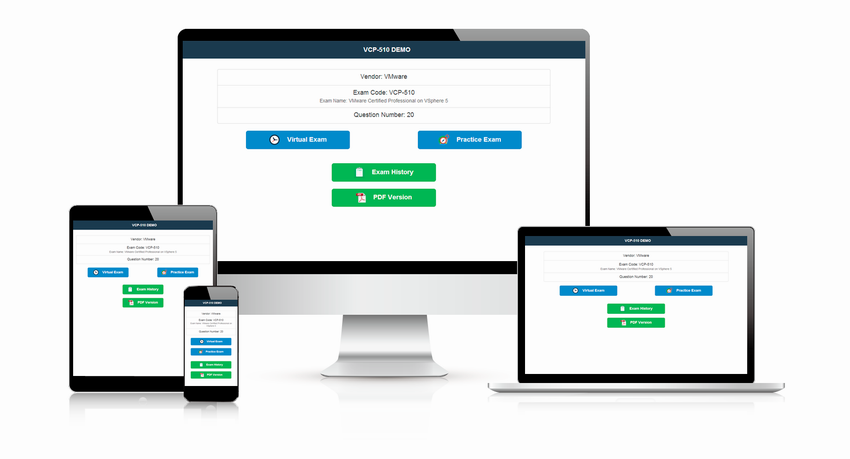
Test engine and online test engine both are a simulation of actual test; you can feel the atmosphere of C_TS452 real exam by test engine and online version. You can only use test engine on the Windows operating system, but online version supports Windows/Mac/Android/iOS operating systems that mean you can practice SAP C_TS452 test questions or test yourself on any electronic equipment. It doesn't limit the number of installed computers or other equipment.
One-year free update
If you bought C_TS452 practice test study materials from our website, you will be allowed to free update your exam dumps one-year. If the latest version of SAP C_TS452 exam dumps released, we will send it your email immediately, you just need to check your email.
About our products
Our website provides our customers with best C_TS452 pass collection study materials. Our C_TS452 exam dumps are written by IT experts who have vast experience and knowledge in the SAP Certified - SAP S/4HANA Cloud Private Edition, Sourcing and Procurement. The certified experts make sure that the SAP C_TS452 exam cram is updated on a regular basis with C_TS452 real exam so every customer can prepare C_TS452 pass guide smoothly. The C_TS452 practice test will enable you to improve your ability with minimum time spent on C_TS452 real exam and maximum knowledge gained.
Our website is a professional certification dumps leader that provides SAP C_TS452 exam dumps material and C_TS452 pass guide for achieving, not an easy way, but a smart way to achieve certification success in C_TS452 real exam. We are equipped with professionals having vast experience in the C_TS452 practice test; they are a committed team of individuals that make sure that the customers get the latest C_TS452 test questions and C_TS452 test answers. Our website is the single best training online tools to find your C_TS452 practice test and to study for your SAP Certified - SAP S/4HANA Cloud Private Edition, Sourcing and Procurement real exam. Our aim is always to provide best quality practice exam products with best customer service.

24/7 customer assisting
We offer 24/7 customer assisting to support you in case you may encounter some problems, such as downloading or purchasing. If you have any problems please feel free to contact us.
Instant Download SAP C_TS452 Exam Braindumps: Upon successful payment, Our systems will automatically send the product you have purchased to your mailbox by email. (If not received within 12 hours, please contact us. Note: don't forget to check your spam.)
No Help, Full Refund
If you failed SAP C_TS452 real exam with our C_TS452 pass guide, first you can choose to wait the updating of C_TS452 exam dumps or free change to other dumps if you have other test. If you want to full refund, please within 7 days after exam transcripts come out, and then scanning the transcripts, add it to the emails as attachments and sent to us. After confirmation, we will refund immediately.
SAP C_TS452 Exam Syllabus Topics:
| Section | Weight | Objectives |
|---|---|---|
| Purchasing Optimization | 8%-12% | - Situation handling and process automation - Quota arrangements and source determination - Central purchasing and contract management |
| Configuration of Purchasing | 8%-12% | - Release procedures for purchasing documents - Output determination and message control - Purchasing document types and number ranges |
| SAP S/4HANA User Experience & Clean Core | <10% | - Clean core implementation principles - Fiori UX for procurement |
| Invoice Verification | 8%-12% | - Invoice blocking and release - Invoice posting and variances - Subsequent debits/credits and delivery costs |
| Procurement Processes | 11%-20% | - Subcontracting and special procurement scenarios - Basic and advanced procurement processes - Self-service procurement |
| Valuation and Account Assignment | 8%-12% | - Material valuation principles - Account determination configuration - GR/IR clearing account handling |
| Sources of Supply | <8% | - Purchasing info records and conditions - Central contracts and scheduling agreements |
| Inventory Management and Physical Inventory | 11%-20% | - Physical inventory procedures - Goods receipt, goods issue, and stock transfers - Special stock and inventory management |
| Analytics in Sourcing and Procurement | <8% | - Supplier evaluation and monitoring - Embedded analytics and reporting |
| Consumption-Based Planning | <8% | - Lot-sizing and procurement proposals - MRP procedures and forecasting |
| Enterprise Structure and Master Data | 8%-12% | - Organizational levels in procurement - Material, vendor, and business partner master data - Info records and source lists |
SAP Certified - SAP S/4HANA Cloud Private Edition, Sourcing and Procurement Sample Questions:
1. <strong>CHALLENGE 3 — Account Assignment Boundaries for Laboratory Project Procurement</strong> A reviewer notes that both of the following are technically workable during SIT: a stricter project-boundary model that preserves account-assignment clarity, and a simplified model that allows project demand to be absorbed into broader operational handling. The business asks which should guide promotion readiness. Which answer is best?
A) Use the stricter project-boundary model unless it prevents mixed demand from being processed in a workable operational sequence
B) Use the simplified model because any workable route is acceptable at this stage
C) Use the simplified model for materials and the stricter model for services only
D) Keep both demand-boundary approaches available so each site can choose based on project workload
2. <strong>CHALLENGE 1 — Warehouse-Sensitive Material Setup for Shared Replenishment</strong> A warehouse coordinator argues that replenishment-critical parts should permit local setup adjustments whenever the shared path does not appear quickly enough during validation. The architecture office wants later rollout waves to inherit the same template behavior without depending on site-specific practices. Which action is most appropriate?
A) Permit local setup adjustments for all maintenance-critical parts because wave speed is more important than template consistency
B) Remove cross-location spare parts from the current wave so only site-specific replenishment remains in scope
C) Delay warehouse-sensitive validation until all prior-region purchasing activity is closed in the legacy environment
D) Preserve common setup discipline and confirm whether representative spare-part demand is entering purchasing execution with aligned warehouse-sensitive assumptions
3. A contract-packaging company is validating evaluated receipt settlement in SAP S/4HANA Cloud Private Edition for a group of repetitive packaging supplies. Purchase orders and goods receipts are posting successfully, and the automated settlement run completes for most suppliers in the pilot company code. However, for one supplier subset, the settlement log shows the documents as technically complete but “not eligible for settlement processing” after the latest control transport. The same suppliers can still be processed through regular invoice entry, so the business process is only partially blocked.
Another supplier subset in the same purchasing organization settles automatically without issue. The project lead wants the team to preserve the automated settlement design for cutover rehearsal. Manual invoice fallback is not acceptable, and no custom logic may be introduced because the same standard design will be reused in later rollout waves.
What should the consultant check first?
A) Review whether the affected suppliers and purchasing documents are correctly aligned to the required evaluated-settlement eligibility settings after the transport.
B) Ask finance to process the excluded suppliers through manual invoices until the rollout template is fully stabilized.
C) Broaden finance authorization so the blocked settlement items can continue through the next scheduled run.
D) Recreate the affected goods receipts because settlement eligibility gaps usually begin with receipt-entry inconsistency.
4. A logistics-services company is validating subsequent debit processing in SAP S/4HANA Cloud Private Edition after harmonizing invoice controls across multiple purchasing teams. Standard purchase orders, goods receipts, and regular supplier invoices post correctly. For most carriers, subsequent debits linked to freight-related purchasing documents also move through the expected process. However, for one carrier segment in a newly harmonized purchasing area, users can enter the subsequent debit document, but the system keeps it in a blocked review state instead of continuing through the normal follow-on processing path.
The same carrier segment worked in the earlier template area before harmonization. The finance owner wants a controlled correction before shared-services expansion. Manual off-system adjustments are not allowed, and the solution must remain standard and transportable for the next rollout phase.
Which action should the consultant take first?
A) Recreate the related purchase orders because blocked subsequent debits usually begin with buyer-side document-entry inconsistencies.
B) Ask the shared-services team to post the subsequent debits manually until the harmonized purchasing area is fully stabilized.
C) Broaden finance authorization so the blocked debit documents can bypass the review state during posting.
D) Review whether the harmonized control settings for invoice verification and follow-on processing are correctly aligned for the affected carrier segment and subsequent debit scenario.
5. A household-cleaning products company is validating return-to-vendor stock movement processing in SAP S/4HANA Cloud Private Edition after migrating one warehouse from an older local process into the shared procurement template. Standard goods receipts and inventory lookups work across all warehouses. However, when warehouse users attempt return postings for damaged stock in the newly migrated warehouse, the system blocks follow-on movement completion for one storage area with a status mismatch.
Return postings for other storage areas in the same warehouse succeed, and the same damaged-stock process works in a previously integrated warehouse. The cutover lead wants the issue resolved before the final mock cutover. Manual inventory correction is not allowed, and the standard warehouse process must be preserved because other sites will use the same rollout pattern.
What is the most appropriate first action?
A) Broaden warehouse authorization so users can complete the blocked returns without the status check.
B) Check whether the affected storage area has a migrated movement-control or status-setting inconsistency preventing standard return posting completion.
C) Ask warehouse staff to move damaged stock to a working storage area before processing returns until go-live is complete.
D) Recreate the return documents because selective movement blocks usually originate in user entry inconsistency.
Solutions:
| Question # 1 Answer: A | Question # 2 Answer: D | Question # 3 Answer: A | Question # 4 Answer: D | Question # 5 Answer: B |


 Hunter
 Borg
Borg 
 Gilbert
  Polly
Polly  Eartha
 Aries
Aries  Augus
Augus  Jerry
Jerry  Baird
Baird  Coral
Coral  Ralap
Ralap  Evelyn
  Kelly
Kelly  Mildred
  Quinn
Quinn  Jonas
Jonas