No Help, Full Refund
If you failed Amazon DOP-C01 Korean real exam with our DOP-C01 Korean pass guide, first you can choose to wait the updating of DOP-C01 Korean exam dumps or free change to other dumps if you have other test. If you want to full refund, please within 7 days after exam transcripts come out, and then scanning the transcripts, add it to the emails as attachments and sent to us. After confirmation, we will refund immediately.
About our products
Our website provides our customers with best DOP-C01 Korean pass collection study materials. Our DOP-C01 Korean exam dumps are written by IT experts who have vast experience and knowledge in the AWS Certified DevOps Engineer - Professional (DOP-C01 Korean Version). The certified experts make sure that the Amazon DOP-C01 Korean exam cram is updated on a regular basis with DOP-C01 Korean real exam so every customer can prepare DOP-C01 Korean pass guide smoothly. The DOP-C01 Korean practice test will enable you to improve your ability with minimum time spent on DOP-C01 Korean real exam and maximum knowledge gained.
24/7 customer assisting
We offer 24/7 customer assisting to support you in case you may encounter some problems, such as downloading or purchasing. If you have any problems please feel free to contact us.
Instant Download Amazon DOP-C01 Korean Exam Braindumps: Upon successful payment, Our systems will automatically send the product you have purchased to your mailbox by email. (If not received within 12 hours, please contact us. Note: don't forget to check your spam.)
Difference between test engine and online test engine
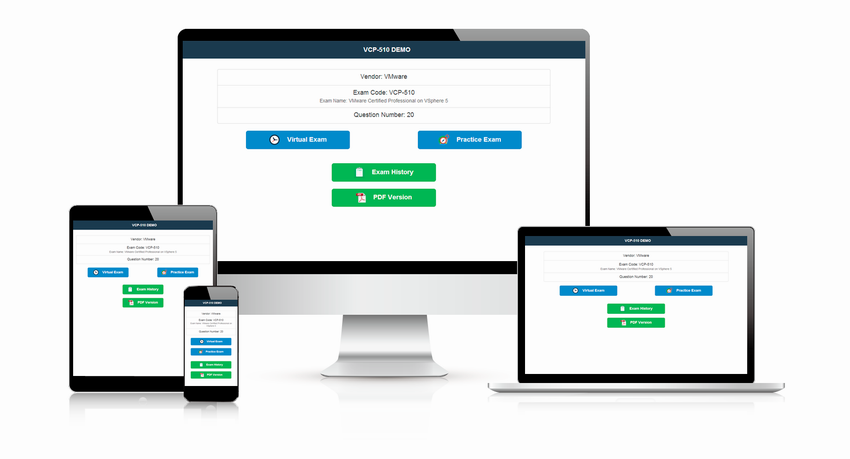
Test engine and online test engine both are a simulation of actual test; you can feel the atmosphere of DOP-C01 Korean real exam by test engine and online version. You can only use test engine on the Windows operating system, but online version supports Windows/Mac/Android/iOS operating systems that mean you can practice Amazon DOP-C01 Korean test questions or test yourself on any electronic equipment. It doesn't limit the number of installed computers or other equipment.
AWS DevOps Engineer Professional Exam formate below
Format: Multiple choices, multiple answers
- Language: English
- Length of Examination: 180 minutes
- Passing score: 750
AWS-DevOps Exam Syllabus Topics:
| Section | Objectives |
|---|---|
SDLC Automation - 22% | |
| Apply concepts required to automate a CI/CD pipeline | - Set up repositories - Set up build services - Integrate automated testing (e.g., unit tests, integrity tests) - Set up deployment products/services - Orchestrate multiple pipeline stages |
| Determine source control strategies and how to implement them | - Determine a workflow for integrating code changes from multiple contributors - Assess security requirements and recommend code repository access design - Reconcile running application versions to repository versions (tags) - Differentiate different source control types |
| Apply concepts required to automate and integrate testing | - Run integration tests as part of code merge process - Run load/stress testing and benchmark applications at scale - Measure application health based on application exit codes (robust Health Check) - Automate unit tests to check pass/fail, code coverage
- Integrate tests with pipeline |
| Apply concepts required to build and manage artifacts securely | - Distinguish storage options based on artifacts security classification - Translate application requirements into Operating System and package configuration (build specs) - Determine the code/environment dependencies and required resources
- Run a code build process |
| Determine deployment/delivery strategies (e.g., A/B, Blue/green, Canary, Red/black) and how to implement them using AWS services | - Determine the correct delivery strategy based on business needs - Critique existing deployment strategies and suggest improvements - Recommend DNS/routing strategies (e.g., Route 53, ELB, ALB, load balancer) based on business continuity goals - Verify deployment success/failure and automate rollbacks |
Configuration Management and Infrastructure as Code - 19% | |
| Determine deployment services based on deployment needs | - Demonstrate knowledge of process flows of deployment models - Given a specific deployment model, classify and implement relevant AWS services to meet requirements
|
| Determine application and infrastructure deployment models based on business needs | - Balance different considerations (cost, availability, time to recovery) based on business requirements to choose the best deployment model - Determine a deployment model given specific AWS services - Analyze risks associated with deployment models and relevant remedies |
| Apply security concepts in the automation of resource provisioning | - Choose the best automation tool given requirements - Demonstrate knowledge of security best practices for resource provisioning (e.g., encrypting data bags, generating credentials on the fly) - Review IAM policies and assess if sufficient but least privilege is granted for all lifecycle stages of a deployment (e.g., create, update, promote) - Review credential management solutions (e.g., EC2 parameter store, third party) - Build the automation
|
| Determine how to implement lifecycle hooks on a deployment | - Determine appropriate integration techniques to meet project requirements - Choose the appropriate hook solution (e.g., implement leader node selection after a node failure) in an Auto Scaling group - Evaluate hook implementation for failure impacts (if a remote call fails, if a dependent service is temporarily unavailable (i.e., Amazon S3), and recommend resiliency improvements - Evaluate deployment rollout procedures for failure impacts and evaluate rollback/recovery processes |
| Apply concepts required to manage systems using AWS configuration management tools and services | - Identify pros and cons of AWS configuration management tools - Demonstrate knowledge of configuration management components - Show the ability to run configuration management services end to end with no assistance while adhering to industry best practices |
Monitoring and Logging - 15% | |
| Determine how to set up the aggregation, storage, and analysis of logs and metrics | - Implement and configure distributed logs collection and processing (e.g., agents, syslog, flumed, CW agent) - Aggregate logs (e.g., Amazon S3, CW Logs, intermediate systems (EMR), Kinesis FH – Transformation, ELK/BI) - Implement custom CW metrics, Log subscription filters - Manage Log storage lifecycle (e.g., CW to S3, S3 lifecycle, S3 events) |
| Apply concepts required to automate monitoring and event management of an environment | - Parse logs (e.g., Amazon S3 data events/event logs/ELB/ALB/CF access logs) and correlate with other alarms/events (e.g., CW events to AWS Lambda) and take appropriate action - Use CloudTrail/VPC flow logs for detective control (e.g., CT, CW log filters, Athena, NACL or WAF rules) and take dependent actions (AWS step) based on error handling logic (state machine) - Configure and implement Patch/inventory/state management using ESM (SSM), Inspector, CodeDeploy, OpsWorks, and CW agents
- Handle scaling/failover events (e.g., ASG, DB HA, route table/DNS update, Application Config, Auto Recovery, PH dashboard, TA) |
| Apply concepts required to audit, log, and monitor operating systems, infrastructures, and applications | - Monitor end to end service metrics (DDB/S3) using available AWS tools (X-ray with EB and Lambda) - Verify environment/OS state through auditing (Inspector), Config rules, CloudTrail (process and action), and AWS APIs - Enable, configure, and analyze custom metrics (e.g., Application metrics, memory, KCL/KPL) and take action - Ensure container monitoring (e.g., task state, placement, logging, port mapping, LB) - Distinguish between services that enable service level or OS level monitoring
|
| Determine how to implement tagging and other metadata strategies | - Segregate authority based on tagging (lifecycle stages – dev/prod) with Condition context keys - Utilize Amazon S3 system/user-defined metadata for classification and automation - Design and implement tag-based deployment groups with CodeDeploy - Best practice for cost allocation/optimization with tagging |
Policies and Standards Automation - 10% | |
| Apply concepts required to enforce standards for logging, metrics, monitoring, testing, and security | - Detect, report, and respond to governance and security violations - Apply logging standards across application, operating system, and infrastructure - Apply context specific application health and performance monitoring - Outline standards for delivery models for logs and metrics (e.g., JSON, XML, Data Normalization) |
| Determine how to optimize cost through automation | - Prioritize automation effort to reduce labor costs - Implement right sizing of workload based on metrics - Assess ways to improve time to market through automating process orchestration and repeatable tasks - Diagnose outliers to determine use case fit
- Measure and automate cost optimization through events
|
| Apply concepts required to implement governance strategies | - Generalize governance standards across CI/CD pipeline - Outline and measure the real-time status of compliance with governance strategies - Report on compliance with governance strategies - Deploy governance policies related to self-service capabilities
|
Incident and Event Response - 18% | |
| Troubleshoot issues and determine how to restore operations | - Given an issue, evaluate how to narrow down the unhealthy components as quickly as possible - Given an increase in load, determine what steps to take to mitigate the impact - Determine the causes and impacts of a failure
- Determine the best way to restore operations after a failure occurs
|
| Determine how to automate event management and alerting | - Set up automated restores from backup in the event of a catastrophic failure - Set up methods to deliver alerts and notifications that are appropriate for different types of events - Assess the quality/actionability of alerts - Configure metrics appropriate to an application’s SLAs - Proactively update limits |
| Apply concepts required to implement automated healing | - Set up the correct scaling strategy to enable auto-healing when a failure occurs (e.g., with Auto Scaling policies) - Use the correct rollback strategy to avoid impact from failed deployments - Configure Route 53 to ensure cross-Region failover - Detect and respond to maintenance or Spot termination events |
| Apply concepts required to set up event-driven automated actions | - Configure Lambda functions or CloudWatch actions to implement automated actions - Set up CloudWatch event rules and/or Config rules and targets - Use AWS Systems Manager or Step Functions to coordinate components (e.g., Lambda, use maintenance windows) - Configure a build/roll-out process to automatically respond to critical software updates |
High Availability, Fault Tolerance, and Disaster Recovery - 16% | |
| Determine appropriate use of multi-AZ versus multi-Region architectures | - Determine deployment strategy based on HA/DR requirements - Determine data replication strategy based on cost and durability requirements - Determine infrastructure, platform, and services based on HA/DR requirements - Design for HA/FT/DR based on service availability (i.e., global/regional/single AZ) |
| Determine how to implement high availability, scalability, and fault tolerance | - Design deployment strategy to support HA/FT/scalability - Assess statefulness of application infrastructure components - Use load balancing to distribute traffic across multiple AZ/ASGs/instance types (spot/M4 vs C4) /targets - Use appropriate caching solutions to improve availability and performance |
| Determine the right services based on business needs (e.g., RTO/RPO, cost) | - Determine cost-effective storage solution for your application
- Choose a database platform and configuration to meet business requirements
- Choose a deployment service/model based on business requirements
- Determine when to use managed service vs. self-managed infrastructure (Docker on EC2 vs. ECS) |
| Determine how to design and automate disaster recovery strategies | - Automate failure detection - Automate components/environment recovery - Choose appropriate deployment strategy for environment recovery - Design automation to support failover in hybrid environment |
| Evaluate a deployment for points of failure | - Determine appropriate deployment-specific health checks - Implement failure detection during deployment - Implement failure event handling/response - Ensure that resources/components/processes exist to react to failures during deployment - Look for exit codes on each event of the deployment - Map errors to different points of deployment |
Reference: https://aws.amazon.com/certification/certified-devops-engineer-professional/
Our website is a professional certification dumps leader that provides Amazon DOP-C01 Korean exam dumps material and DOP-C01 Korean pass guide for achieving, not an easy way, but a smart way to achieve certification success in DOP-C01 Korean real exam. We are equipped with professionals having vast experience in the DOP-C01 Korean practice test; they are a committed team of individuals that make sure that the customers get the latest DOP-C01 Korean test questions and DOP-C01 Korean test answers. Our website is the single best training online tools to find your DOP-C01 Korean practice test and to study for your AWS Certified DevOps Engineer - Professional (DOP-C01 Korean Version) real exam. Our aim is always to provide best quality practice exam products with best customer service.

One-year free update
If you bought DOP-C01 Korean practice test study materials from our website, you will be allowed to free update your exam dumps one-year. If the latest version of Amazon DOP-C01 Korean exam dumps released, we will send it your email immediately, you just need to check your email.